
The Back-to-School Dental Checklist: 7 Things Parents Should Check Before September

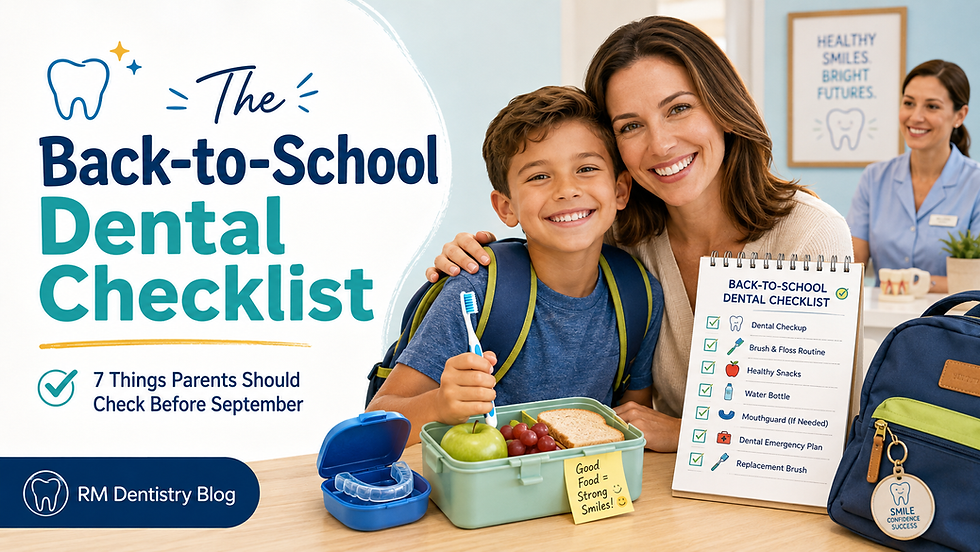
New shoes, labelled lunch boxes, school supplies, activity schedules—the weeks before September come with a long checklist.
Your child's teeth probably aren't at the top of it.
But once school starts, a small dental issue can turn into a missed class, a difficult lunchtime, or an unexpected appointment in the middle of a busy week.
So before the school year gets going, here are 7 often-overlooked things worth checking.
1. When was their last dental checkup?
It's surprisingly easy to lose track, especially when your child isn't complaining about anything.
The problem is that early tooth decay may not hurt. A child can feel completely fine while a cavity is developing.
Regular dental exams give your dentist an opportunity to spot smaller concerns before they become bigger ones. The Canadian Dental Association notes that routine exams can identify decay, problems with incoming teeth, and other concerns early.
If you have to think hard about when their last appointment was, that's probably worth checking before September.
2. Look behind the last baby tooth
This is one every parent should know.
At around six or seven years old, a child's first permanent molars begin appearing at the very back of the mouth.
But here's the confusing part:
No baby tooth falls out to make room for them.
They simply grow behind the existing baby teeth. Because of that, they can easily be mistaken for "just another baby tooth"—even though these teeth are meant to stay for life.
These new molars also have deep grooves that can trap food and bacteria. Depending on your child's teeth and cavity risk, your dentist may recommend dental sealants, which create a protective barrier over those grooves. Evidence-based guidelines support sealants as an effective way to help prevent cavities in children's molars.
If your child is around six, take a peek—you may discover a permanent tooth you didn't realize was there.
3. Don't just ask, “Did you brush?”
Most parents eventually reach the wonderful stage where their child announces:
“I can do it myself!”
Unfortunately, independence and thorough brushing don't always arrive at exactly the same time.
Instead of simply checking whether brushing happened, watch one brushing session before school starts.
Are they reaching the very back teeth? Are they brushing along the gumline? Do they spend two minutes—or about twenty seconds?
Also inspect the toothbrush itself. Bent, flattened or frayed bristles don't clean as effectively. The Canadian Dental Association recommends replacing a child's toothbrush at least every three to four months, and sooner when the bristles are worn. Young children should also be supervised while brushing.
A fresh toothbrush makes an easy addition to the back-to-school shopping cart.
4. Think about how often they snack
When we think about cavities, we naturally think about candy.
But there's another part parents sometimes overlook: how frequently teeth are exposed to food and sugary or acidic drinks.
A sweet snack eaten once isn't the same pattern as sipping juice or a sports drink little by little throughout the afternoon.
That's why the school-year routine matters.
For everyday lunches and activities, water is the simplest tooth-friendly drink. The Ontario Dental Association also cautions that sports and energy drinks can contribute to both tooth decay and dental erosion because of their sweetness and acidity.
You don't need to create a sugar-free childhood. Just try to avoid turning the entire afternoon into one continuous snack.
5. Check last year's mouthguard before using it again
If your child plays hockey, soccer, basketball, football, lacrosse, martial arts or another activity where falls and collisions happen, add one more item to the equipment check:
Does the mouthguard still fit?
Children grow quickly. Teeth fall out, permanent teeth erupt, and bites change.
A mouthguard that fit last season may not fit properly this season.
The Ontario Dental Association recommends mouthguards for sports or activities where players may come into contact with another person or a hard surface. Proper fit matters for comfort, breathing, speech and protection.
If you're coming in for a dental appointment anyway, bring the mouthguard along. Your dentist can check its condition and fit.
6. Pay attention to the little complaints
Children don't always say: “I have dental pain.” Instead, you may notice:
“I don't want to chew on this side.
“Cold water feels weird.”
“Food always gets stuck here.”
“My gums bleed when I brush.”
“This tooth feels funny.”
Those comments are worth listening to.
Persistent bleeding gums, swelling, sensitivity, pain when chewing or a noticeable change in a tooth shouldn't simply be carried into the school year and forgotten. The Canadian Dental Association advises having gums that remain swollen, sore or bleeding assessed by a dentist.
Sometimes the best dental screening tool at home is simply asking: “Has anything in your mouth been bothering you lately?”
You may get a very different answer than you would from, “Do your teeth hurt?”
7. Have a plan for dental accidents
Hopefully you'll never need this one. But school means playgrounds, gym class, sports, skating, bikes and plenty of opportunities for an accidental bump to the mouth.
Make sure the school or caregiver has your current contact information, and keep your dentist's phone number somewhere easy to find.
It's especially important to know that a knocked-out permanent tooth can be a dental emergency. Getting dental care quickly can make a major difference.
And That's Only Part of What We Check
A child's dental exam involves much more than looking for cavities.
Depending on your child's age and individual needs, we may also evaluate things such as:
Enough space for new teeth to come in
upper and lower teeth/jaw relationship (how it affect their eating)
The health of the gums and areas that may be difficult to keep clean
Signs of tooth grinding, enamel wear or unusual tooth sensitivity
Decay between teeth that may not be visible just by looking, with dental X-rays taken only when appropriate
Every child's mouth develops differently, so not every child needs exactly the same things at exactly the same age.
Start the School Year With One Less Thing to Worry About
Back-to-school season is already busy enough.
A quick dental check now can help make sure a developing cavity, poorly fitting mouthguard, newly erupted permanent molar or other small concern doesn't become an unwanted surprise once school is underway.
If you need, Give us a call. Our team would be happy to take a look, answer your questions, and help your child start the school year with a healthy, confident smile.


Comments